Frequently Asked Questions
Below you will find information that might help you understand how to find things or learn about information you might need to know about your city or town.
Air Quality
7-
Air Quality
Outdoor activity is not recommended when the air quality index is orange or higher. With the AQI, the lower the number, the better and the colors are like a stoplight.
- Green (0-50) is great air quality and a go for normal activity.
- Yellow (51-100) is still good, but based on your sensitivity, you might want to think about your activity level.
- Orange (101-150) and red (151-200) indicate air quality is poor and you should stop and think about the potential impacts of your activities on your health. Monitor for symptoms.
- Purple (201-300) indicates the air quality is very unhealthy and everyone is affected.
- Maroon (301-500) indicates the air quality is hazardous.
Find out what the current air quality index is at www.AspenAirQuality.com.
-
Air Quality
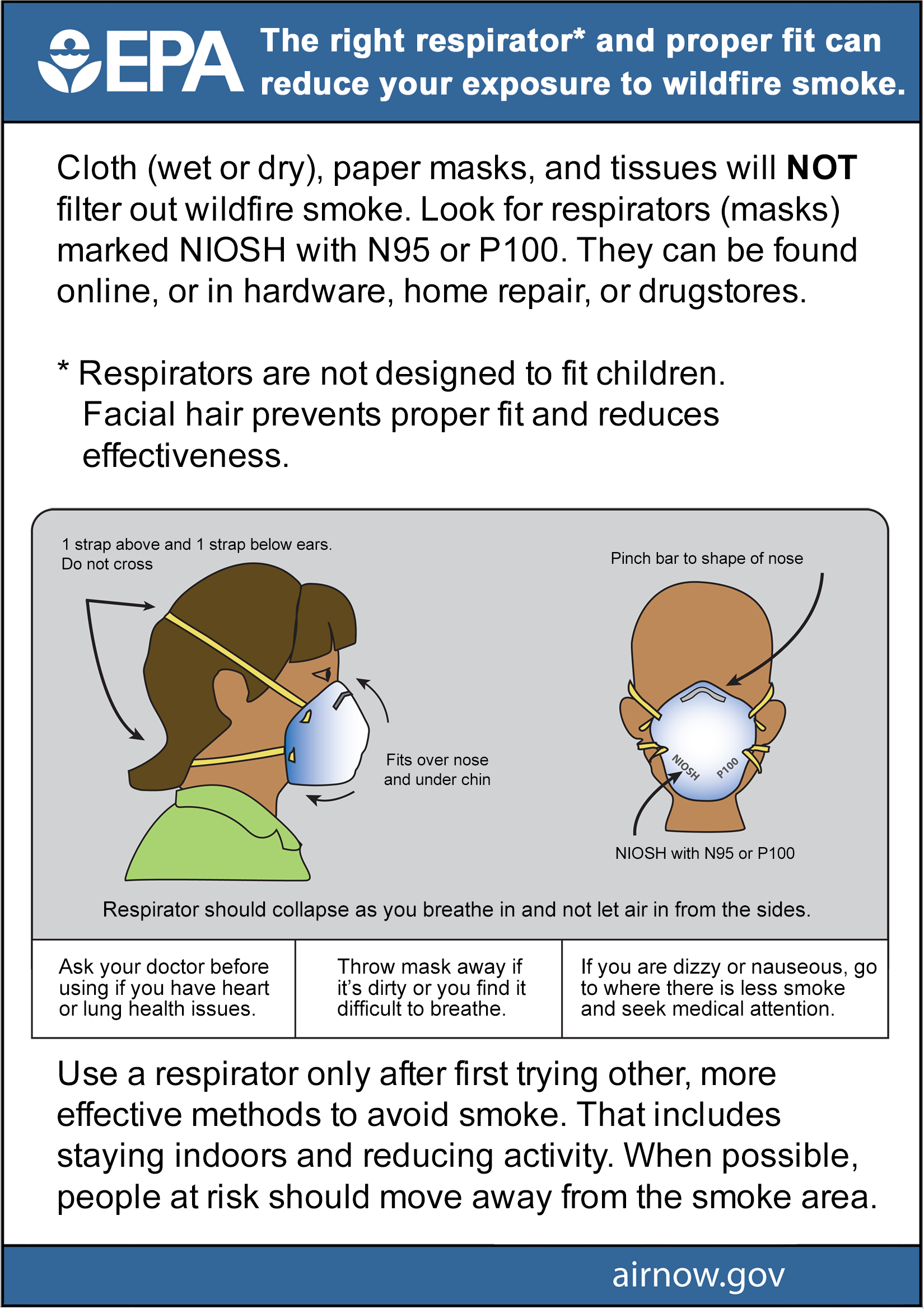
If you must work outside when the air quality is poor, take measures to protect yourself and your employees:
- Wear an N95 or P100 mask.
- Hydrate.
- Limit heavy exertion.
- Take breaks inside a clean air environment.
- Make a clean air room at home.
-
Air Quality
At EPA’s AirNow.
-
Air Quality
-
Air Quality
The impacts of wildfire smoke on Aspen’s air quality can only be predicted for 1- 2 days. We recommend the following websites for more information about where smoke is moving and air quality levels:
-
Air Quality
It is hard to predict if Aspen will be impacted by wildfire smoke during your visit. Unfortunately, summers in the west and across the nation are regularly impacted by wildfire smoke. The best thing to do is be prepared. We encourage you to speak with your doctor about the impacts of wildfire smoke based on your current health.
You can find more information about wildfire smoke and air quality on the following websites:
-
Air Quality
Keep indoor air quality clean in your home by:
- Limiting stovetop cooking for either gas or electric.
- Not burning candles.
- Limiting vacuuming during an air quality event; vacuums can put a lot of dust and particles in the air.
- Closing windows and doors when the smoke hinders you from seeing five miles away and/or AQI is orange.
- Setting your air conditioning (AC) unit to “recirculate”.
- Opening windows to ventilate once the smoke dissipates.